Welcome to our latest update! Ιn this issue:
- Toolkits on the Move: Events Across Europe
- Coming up next: 4th ambassadors’ webinar & new research on NEETs
- What’s new in our VET toolkits
- Latest Toolkits’ Blog Articles
- Cedefop contributions to the European School Education Platform
- News and achievements from our ambassadors
- Welcoming new ambassadors & a new team member
Toolkits on the Move: Events Across Europe
European Alliance Against Early Leaving (9–11 September, Gran Canaria)
Cedefop expert Irene Psifidou delivered a keynote on European policies to tackle early leaving and empower NEETs, followed by three hands-on workshops on early warning systems, risk identification and digital inclusion. Spanish VET teachers co-designed tools and guidelines inspired by the VET toolkit.
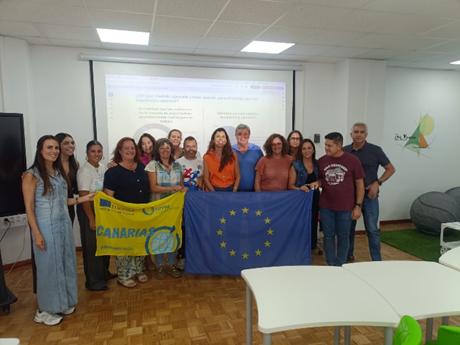
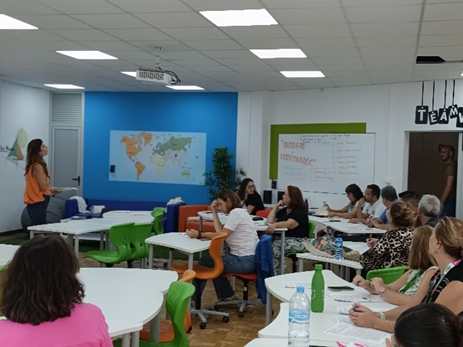
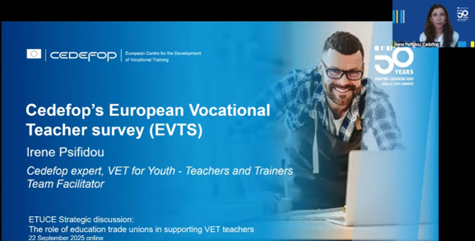
Irene Psifidou announced the launch of Cedefop’s European Vocational Teacher Survey (EVTS) - a major new data source on teachers’ professional development needs to promote digital, green and inclusive VET.
4th Policy Learning Forum – Launch of EVTS (25–26 September, Cedefop)
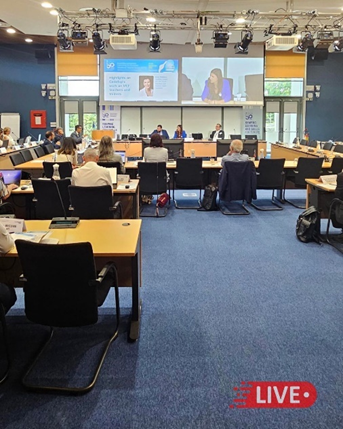
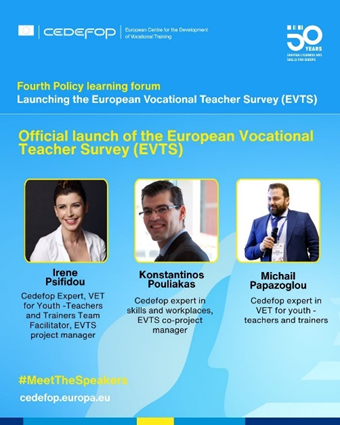
Cedefop officially launched EVTS before 250+ participants. Discussions highlighted teacher shortages, workload pressures, limited career progression and uneven CPD access. Findings will feed directly into the toolkit’s intervention approach on Professional development for inclusive teaching and learning.
See events videos here for Day 1 and Day 2.
ETF New Learning Club (6 October, online)
Irene Psifidou, on World Teachers’ Day praised and thanked all teachers who open doors, spark curiosity, and change lives every single day. She gave a keynote speech on: “From the classroom up: amplifying the voices of European VET teachers to shape policies” and shared early EVTS pilot findings.

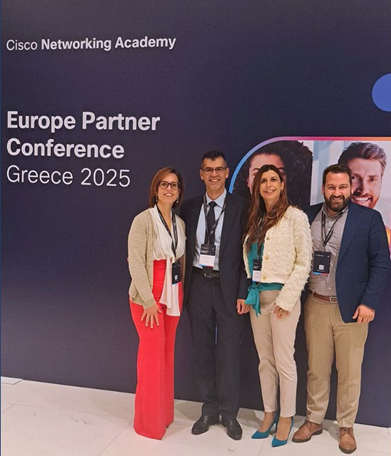
Cisco Networking Academy Conference (9 October, Thessaloniki)
Cedefop experts Konstantinos Pouliakas and Irene Psifidou showcased how AI can support inclusion, highlighted teacher preparedness gaps, and presented EVTS pilot data, stressing the importance of teachers’ digital skills for inclusion and accessibility.

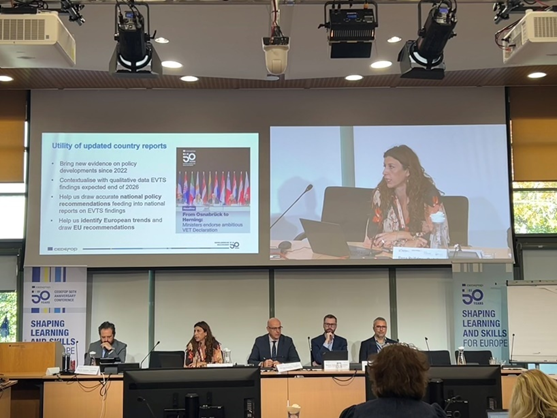
ReferNet Annual Plenary meeting (22–23 October, Cedefop)
Cedefop experts, Michail Papazoglou and Irene Psifidou presented new research on digital skills in IVET and announced the 2026 update of Teachers and Trainers in a Changing World, Cedefop/ReferNet country reports. The updated reports to be published in 2027 will provide rich information, among other, on the professional development opportunities for VET teachers and trainers to promote inclusion.
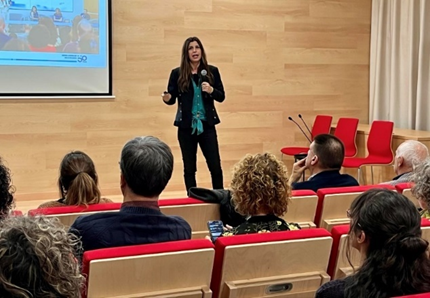
Center for Research and Studies for Organizational Development (CRiEDO) - The Autonomous University of Barcelona (19 November, Barcelona)
Irene Psifidou, invited as keynote speaker, highlighted trends in early leaving from VET and the crucial role of timely inclusive career guidance and counselling. She also gave a media interview on early leaving and mentoring in Spain. The interview, in Catalan, can be accessed through this link.

European Sectoral Social Dialogue in Education (2 December, online)
Irene Psifidou presented the first pilot EVTS results to ETUCE and EFEE members, who welcomed the survey’s insights for supporting teachers across Europe. EVTS reveals that 20-30% of VET teachers require to a great extend competences to manage vulnerable students, challenging behaviours, and inclusive learning.
Standing Group on Indicators and Benchmarks meeting & Stakeholder Consultation Workshop for the new European Agenda on teachers and trainers (9 December, online)
Irene Psifidou and Konstantinos Pouliakas presented EVTS pilot findings in high level working groups shaping the new European agenda of teachers and trainers, that is the Standing Group on Indicators and Benchmarks (SGIB) meeting and the Stakeholder Consultation Workshop on the New Agenda.
According to these preliminary findings, about one in five initial VET teachers feels unprepared to teach highly diverse groups, and one in four needs more training to identify vulnerable learners. The challenge of addressing student misbehaviour, including bullying or even violence, is highlighted by nearly a third of teachers asked. These numbers capture the growing complexity of today’s VET learning environments and the need for teachers to acquire competences to manage differences in learning levels, social backgrounds, and emotional needs.
Coming Up Next
4th Ambassadors Webinar “Harnessing AI & Digital Technologies to Empower Young People at Risk” to take place on Wed, 11th March 2026 - 10:30 - 12:30 (Brussels time)
Cedefop in 2026 will launch an internal research initiative titled “Harnessing AI & Digital Technologies to Empower Young People at Risk.” At the beginning of the year, a call for papers will be published, inviting contributors to share new evidence, insights, and experiences in this emerging field.
Selected authors will be invited to present their work at a high-level policy learning forum in 2027, and their papers will be published in a dedicated issue of the Cedefop Working Paper series.
As part of this initiative, we aim to focus our next Ambassadors’ Webinar on this innovative subject and warmly invite all of you to contribute by submitting papers, good practices, projects, or other relevant materials. Your input will be instrumental in shaping evidence-based strategies and policy recommendations for supporting young people at risk through AI and digital technologies.
If you wish to be a speaker in our webinar, contact us at: vet.toolkit@cedefop.europa.eu.
Official invitation to the webinar will follow by email to ambassadors’ network members.
New Cedefop Research Paper coming soon:
Building Inclusive Futures: VET Solutions for Europe’s NEETs
A major milestone this year is our upcoming Cedefop research paper “Building Inclusive Futures: VET Solutions for Europe’s NEETs”, authored by Stefanie Ledermaier, Michail Papazoglou and Irene Psifidou. The paper examines how vocational education and training can reduce NEET rates, drawing on literature, Cedefop’s NEETs toolkit, and the latest Eurostat data, with a focus on gender and regional differences. It concludes with key policy messages for Member States, VET providers and practitioners to support the EU Skills Agenda and the European Pillar of Social Rights - especially by improving inclusion for female NEETs and young people in remote or rural areas.
What’s New in the VET Toolkit for Tackling Early Leaving
New Good Practice
Updated Intervention Approach
9 New Publications Added
Including the Education and Training Monitor 2025, InclusiVET Mapping Report, and a series on teaching basic skills (literacy, maths, science, digital skills, citizenship).
What’s New in the VET Toolkit for Empowering NEETs
New Intervention Approach
New Good Practices
Updated Intervention Approaches
Validation, Lifelong guidance, Flexible systems, Transitions to work
New Publications
Six new resources including What works in reducing NEET rates, ILO and EURES reports, NEETs in the digital age, ESDE 2025 and more.
Latest Toolkits’ Blog Articles
Zooming In on Europe’s New Push to Empower VET Teachers – by Irene Psifidou and Vassilis Symeonidis
Insights from EVTS on workload, recognition, and CPD, but also on how countries are integrating digital and green skills and mentoring into teacher development to promote inclusive learning.
Europe’s First Survey for VET Teachers – by Irene Psifidou, Michail Papazoglou, and Kostantinos Pouliakas
A deep dive into how EVTS gathers comparable EU-wide data on teaching conditions, wellbeing, and inclusion practices.
Cedefop on the European School Education Platform
Strengthening Initial Teacher Education for VET Teachers – by Irene Psifidou
Why strong ITE (in addition to induction and CPD) is essential to Europe’s competitiveness, learner inclusion, and early leaving prevention.
Building Stronger Communities to Keep Learners Engaged – by Irene Psifidou
A whole-community approach – involving schools, families, employers, local authorities - boosts wellbeing, retention, and equity, aligning with the European Education Area and the Council 2022 Recommendation on Pathways to School Success.
Ambassadors in action
- Balearic Islands – Carme Pinya Medina: Action-research with VET teachers to design anti-dropout strategies, through the evaluation of current teaching practices, as well as the elaboration of new teaching materials, tools and a new action plan on preventing early leaving from VET.
- Slovakia – Alena Minns: Launching Digital Start, an online skills and counselling platform for NEETs, offering innovative online diagnostics and training for NEETs to help build digital and personal skills in high labour market demand (Dec 2025).
- Italy – Elisabetta Buono: Promoting toolkits and AI solutions for neurodivergent and demotivated learners, as well as ways in which AI can support teachers in preventing early leaving.
- Spain – Dr Sofia Leitão: Speaker at European Conference on Children’s Rights in the Age of AI (25 November), which reunited young people in Youth Panels for Diversity on the issue of inclusion in the digital era.
- France – Minh Huy Lai: Publication of the blogpost “Mentorship in Action” on why mentorship matters for vulnerable learners and presentation at the European Network of PES Annual Conference on mentorship as part of a workshop on holistic approaches to support most vulnerable groups, including NEETs.
- Czech Republic – Dr Martin Majcík: Publication of a new article on career counsellors’ approaches to dropouts.
- Portugal – Maria Manuel Mano Casal Ribeiro: Supporting young entrepreneurs through the Erasmus for Young Entrepreneurs (EYE) programme, helping them acquire knowledge to manage small businesses through exchanges.
- Greece – Dimitris Kiriakos: Sharing SupportSphere Erasmus+ project for holistic youth support, which brings together partners to develop tools that combine psychological, social, and educational approaches to help NEETs.
- Lithuania – Eglė Celiesiene: Promoting Atrask.EU, advocating for civic engagement and entrepreneurship among rural youth, as well as the development of digital competences and social inclusion — winner of the European Young Innovators Award 2024.
Welcome to Our New Ambassadors
 Nayra Moreno Manager at Fundación Sergio Alonso | Manager at Fundación Sergio Alonso with extensive experience in strategic communication, project management and institutional partnerships within the social, education and employment fields. Highly motivated to contribute to the Cedefop Ambassadors network by promoting vocational education and training as a key driver of inclusion and talent development in the Canary Islands and across Europe. |
Mario Brun Director of the Centre for Innovation and Development in Education & Technology | Prof. Brun has a background in education policy and institutional development, supporting national and international efforts to strengthen inclusive education systems and reduce early leaving, particularly through strategic collaboration in VET across Europe and Latin America. He joined the network to help build a more resilient and fairer VET ecosystem across Europe, by sharing meaningful practices and supporting institutions in shaping inclusive, impactful interventions. |
Dr. Alexia Peyser Project Director at International Bureau for Education and Training (BIEFOR) | Alexia Peyser Alciaturi (PhD) is a sociologist with a master and doctorate degree in Development, Population, and Environment from the Catholic University of Leuven, Belgium. After working for six years at the United Nations Regional Office in Santiago, Chile (ECLAC), she served as an educational project coordinator for 20 years at BIEF in Belgium, and since 2019 has been a project director at BIEFOR (International Bureau for Education and Training), an international research and consulting firm associated with the before mentioned Belgian university. As a curricular methodologist, she is responsible for supervising international technical assistance teams, as well as the implementation and the evaluation of educational innovations, particularly those based on the competency approach. She has supported such implementations from preschool to higher education systems (including VET and teachers’ training curricula) worldwide. Becoming an ambassador for the European Network for tackling early leaving from VET seemed a relevant space where to capitalize and share from her rich and varied technical experience. |
Dr. Oriol Martínez Peiruza Institut Barri Besòs | Dr Oriol Martinez has a doctorate in Comparative, Social and Political History from the Autonomous University of Barcelona. He is a High School Professor, teaching a series of subjects at the Institut Barri Besòs, in Barcelona. During the 2.5 years that he has been working for the Generalitat de Catalunya as professor of Geography and History for the majority of high schools where he has worked were centres of maximum complexity. On his motivation to join the Cedefop Network of ambassadors for tackling early leaving he replied: “And speaking about inclusivity, why all the policies are worried to make feel inclusive the students and not the professors? I'm in that network to try to create interesting discussions like that and for learning from the rest in different ways!” |

Juan Acosta Innovation Agent at Puntos Vuela and Municipality of Mengibar | Juan Acosta is an Innovation Agent at Puntos Vuela, responsible for organising training related to new technologies, e-government, digital skills, and employability. He has been working for over 20 years on training, mainly on non-formal education, and developing tasks related to the management, development, and monitoring of training programmes for local and national entities. He is also an Aula Mentor, offering courses from the Spanish Ministry of Education to people interested in lifelong learning, with a catalogue of more than 200 training activities. He is responsible for coordinating activities with educational centres and promoting STEM methodology among young people and adults. He is also the coordinator of the Erasmus+ programme. He is passionate about technology and STEM training. |






Meet Our New Team Member
 Zoi Kamopoulou Cedefop trainee (joined October 2025) | Zoi has an academic background in law, diplomacy, and international governance, with experience in international labour policy and social rights. Her work has focused on issues such as labour standards, corporate social responsibility, and the promotion of decent work and inclusion in Europe and beyond. Motivated by her interest in youth empowerment, social justice and inclusion, Zoi supports our team’s projects on enhancing the quality and inclusiveness of VET. She contributes to research on policies that foster participation of vulnerable groups in VET and helps identify inspiring practices and networks across Europe. |

Blog article details