
As European democracies face mounting challenges from misinformation and declining youth engagement, the European Union is elevating citizenship education to a fundamental pillar, positioning it alongside literacy and digital skills as essential competences for the 21st century.
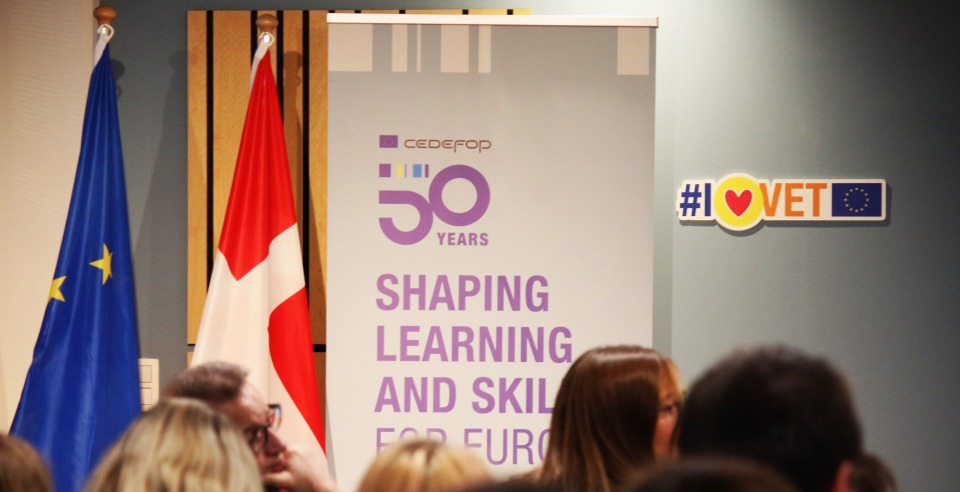
The 2025 Union of Skills has formally recognised citizenship as the "fifth basic skill" through its Action plan on basic skills, aiming for a significant shift for education, including vocational education and training (VET) systems across Member States. Citizenship also took centre stage at Cedefop’s 19th Brussels Seminar organised in cooperation with the Danish Presidency of the Council of the EU, where policy makers, social partners and experts outlined strategies to ensure VET learners acquire the democratic competences necessary for active citizenship.
We need to prepare students at all educational levels for not only ensuring labour market efficiency, but also to be citizens in democratic societies, in a time when European values are under pressure. – Marie Juel Bech Nielsen, Deputy Permanent Secretary in Denmark's Ministry of Children and Education.
VET learners and citizenship
The urgency is underscored by troubling data. Research shows that VET students and graduates demonstrate lower civic knowledge, political participation, and trust in institutions compared to peers in general education. With 43 percent of VET students aged 15-19 – a critical period for forming political identity – the stakes for democratic resilience are high."Citizenship in VET is not just an education priority. It's essential for democratic resilience" stressed Jürgen Siebel, Cedefop's Executive Director, noting that VET learners often come from less privileged backgrounds with fewer opportunities for democratic experiences than those on academic pathways.
The 2025 Herning Declaration has already signalled this shift, emphasising the need to foster basic and transversal skills, including citizenship education, to ensure learners' adaptability to changing labour markets while strengthening democratic participation, also aligned with the European Commission's broader Democracy Shield initiative.
Anna Banczyk, Head of Unit, VET, Skills Portability, Directorate-General for Employment, Social Affairs & Inclusion, European Commission, emphasised that VET should play as important a role as general education in shaping civic identity, announcing that citizenship education would be mainstreamed across the Commission initiatives, including the upcoming European Strategy for VET.
From policy to practice
The dual nature of VET – combining classroom learning with workplace experience – offers unique opportunities for democracy education in practice. Denmark's Skills City project in Herning exemplifies this approach, creating a functioning campus community with its own council, housing, and democratic structures where students actively shape their environment and take part in the decision-making process of the campus.
Yet across Europe, implementation challenges remain. Participants in the seminar stressed that educators require better preparation and support, while civic education must extend beyond classrooms through extracurricular activities and partnerships with social actors.
This teaching cannot be done only by teachers because they already have a very large agenda – Carlo Frising from the European Trade Union Confederation.
Michaela Franke from the European Parliament's Directorate for Citizens, Equality and Culture underscored the stakes: "Citizenship competence is the backbone of our democracies." She highlighted initiatives like Erasmus+ for fostering European identity and the importance of media literacy to help young people navigate digital information landscapes.
The Brussels gathering signals a fundamental shift: vocational education must now deliver not only employability but also the democratic skills essential for Europe's future resilience.