The Cedefop site is under maintenance - You can browse the site normally, but registration, login and application forms are disabled until 28/Sept, 17:00 CET. If you notice any issues please report them to webteam@cedefop.europa.eu

CEDEFOP
European Centre for the Development of Vocational Training
Eight million young Europeans are stuck in limbo- neither in school, training, nor work. The solution isn’t just motivation - it’s opportunity. Cedefop’s new report shows how vocational education and training (VET) can turn disengagement into empowerment, offering personalized pathways, hands-on skills, and a real chance to thrive in the digital and green economy.
Europe’s digital transformation is accelerating but its skills base is not keeping pace. Despite years of policy focus, only around half of Europeans possess even basic digital competences, while employers across sectors increasingly report that skills shortages are constraining investment, innovation, and growth. The challenge is no longer about recognising the importance of digital skills. It is about delivering them systematically, equitably, and at scale.
As generative AI reshapes societies, European education and training policy faces a central challenge: how to harness AI’s potential while maintaining the human core of learning - critical thinking, ethical judgement, hands-on skills and social interaction. Across Europe, VET and education policymakers are experimenting with ways to safeguard human learning in AI classrooms, ensuring that technology complements, rather than replaces, human interaction.
Generative AI is rapidly reshaping the world of work, raising a fundamental question for European skills policy: will it widen inequality or help reduce it? The answer depends less on the technology itself and more on how it is governed, accessed, and embedded in education and training systems, including vocational education and training (VET).
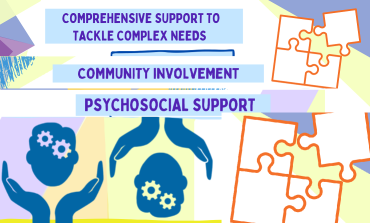
Reintegration of individuals at risk into education, training or the labour market is one of the main objectives of vocational education and training (VET) and lifelong learning programmes. A holistic approach embedding strengthened cooperation among a wide range of stakeholders is key in achieving this objective.
Low levels of skills are associated with negative economic and social consequences not just for the individuals and their families but also for the whole economy and society.
The other side of the coin is that investing in education is linked to higher economic and social returns. Thus, empowering low-skilled adults by means of promoting their upskilling and re-skilling must be seen as a priority, especially nowadays that employment and the economy overall is becoming skills intensive.